


Faculty & Research
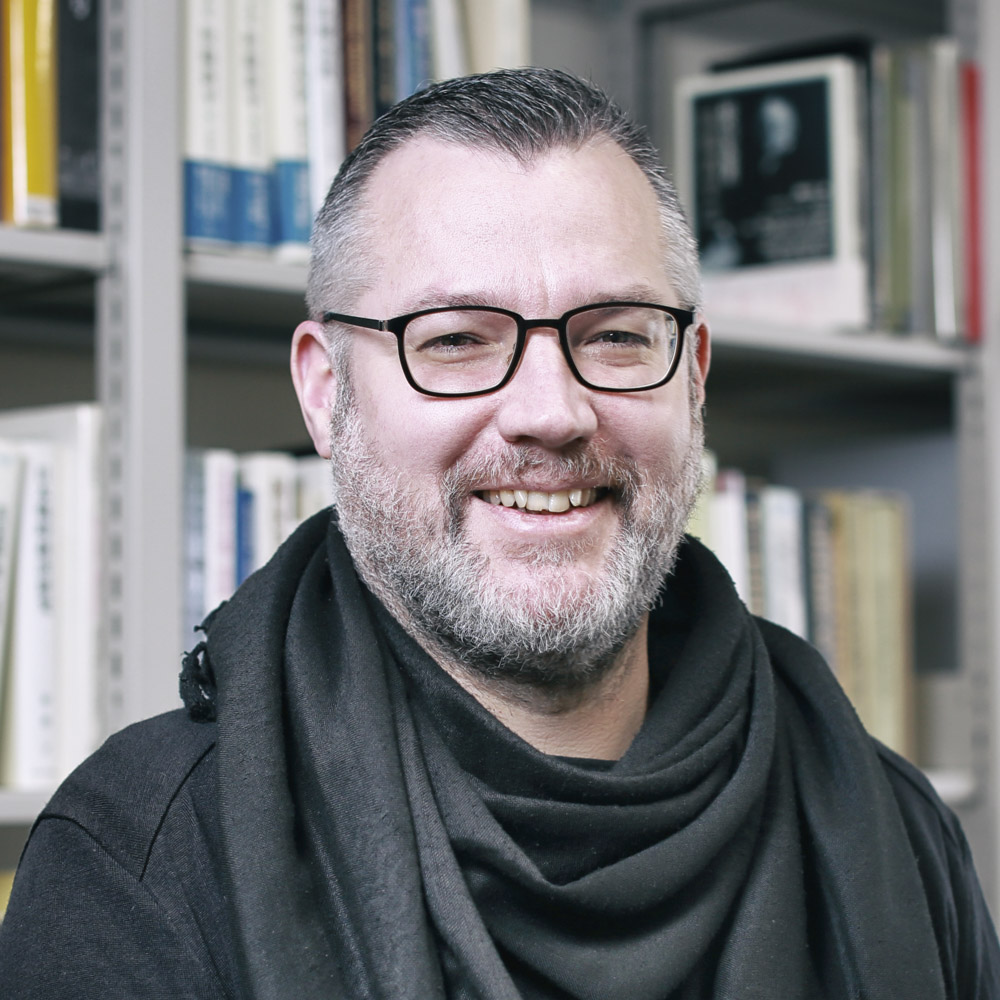
Michael Schiltz
Belgium
Associate Professor
Research Keywords
Japanese history, economic / financial history, Asian history, digital humanities
Qualifications
BA: University of Leuven
MA: University of Leuven
PhD: University of Leuven
MA: University of Leuven
PhD: University of Leuven
Message
As a financial historian, I am fascinated by the ways in which money and finance have made modern society tick, especially since the ‘first globalization’ (1870-1914), a period that coincides with the proliferation of the gold standard on a global scale. Of particular interest to me are are the so-called network effects that are innate to currencies when it comes to their role as means of settling international trade. As we know from the historical record, network effects produce and reproduce center-periphery constellations with strong consequences for the way both center and periphery come to terms with more or less identical problems. This center-periphery dynamic was the crux of my first book project on imperial Japan’s definition of monetary regimes in the empire’s own periphery (Taiwan, Korea, Northeast China and Manchuria). It also figures strongly in my second, now completed, book project on the managing practice within the country’s semi-national exchange bank, the Yokohama Specie Bank. In charge of boosting Japanese trade with both the world’s leading economic powerhouses and the Asian Hinterland, its bankers were profoundly aware of the schisms between the former and the latter. As the book demonstrates, it defined the bank’s role and evolution in the steadily expanding Japanese influence on the Asian mainland.
I also have a not so secret double-life as an explorer of the digital revolution for scientific practice and communication. The latter has come to have a direct impact on my own research and teaching. I chose to document both through non-conventional means as e.g. twitter (@michaelschiltz) and GitHub (https://github.com/michaelschiltz)
In my classes, the multilingual aspect is key. It is very refreshing when different students engage with primary and secondary sources in Japanese, English, Chinese, Korean, etc. Both Japanese and non-Japanese students are warmly invited to participate in my courses. As the era in which we live has made the consultation of primary sources both practical and desirable, they will form the basis of presentations and discussions. Last, I tend to organize my classes in a very open, nonhierarchical way. Learning should be a fun and gratifying experience!
I also have a not so secret double-life as an explorer of the digital revolution for scientific practice and communication. The latter has come to have a direct impact on my own research and teaching. I chose to document both through non-conventional means as e.g. twitter (@michaelschiltz) and GitHub (https://github.com/michaelschiltz)
In my classes, the multilingual aspect is key. It is very refreshing when different students engage with primary and secondary sources in Japanese, English, Chinese, Korean, etc. Both Japanese and non-Japanese students are warmly invited to participate in my courses. As the era in which we live has made the consultation of primary sources both practical and desirable, they will form the basis of presentations and discussions. Last, I tend to organize my classes in a very open, nonhierarchical way. Learning should be a fun and gratifying experience!
Classes Taught on MJSP
Japanese History II, Introduction to Japanese Studies (History), 日本制度論 III
Selected Publications and Further Information
Modern Japanese Studies Program Faculty

Jonathan Bull
Lecturer
History: decolonisation, forced migration, settler colonialism, oral history. Memory studies: narrative, social memory formation, museums


Emma Cook
Professor
Japanese youth employment, gender, health and wellbeing, food and social life

Takayuki Ito
Professor
Modern Japanese language history, Japanese language education history

Tadashi Iwami
Lecturer
International Relations, International Politics, Japan’s Foreign and Security Policy, Security Studies, Asian Studies, Oceania Studies, New Zealand, Indo-Pacific

Susanne Klien
Professor
Rural Japan, lifestyle migration, transnational mobility, regional revitalization, new modes of working and living, intangible cultural property

Shunsuke Nozawa
Associate Professor
Ethnography of communication, semiotics of culture, politics of language, popular culture, popular history, voice, contact, linguistic anthropology

Hironori Sasada
Professor
Political economy of Japan and East Asia, foreign policy, agricultral policy, party politics
Other Instructors who Teach on MJSP

Juha Saunavaara
Associate Professor
Arctic, north, Hokkaido, Japan, infrastructure, connectivity, governance, international collaboration

Michelle La Fay
Professor, Faculty of Humanities and Human Sciences
Religious Studies, Meiji Era Protestantism, Uchimura Kanzo

Peter Firkola
Part-time lecturer
Japanese management, career development, HRM, recruitment practices

Sachiko Ito
Associate Professor, Musashi women’s university
Distribution, marketing, information society, consumers

Caitlin Coker
Associate Professor, Faculty of Humanities and Human Sciences
Movement studies, Performance studies, Affect theory, Dance, Butoh, Pole Dance, Art/Entertainment, Eroticism, Sensation and Imagination

Paul Spicer
Specially Appointed Associate Professor, Research Faculty of Media and Communication
Film Studies,Film History,Cultural Studies,Popular Music Theory and History

James Letson
Associate Professor
Music subcultures, Community building, Intergenerational relationships, Ethnography, Social theory, Pedagogy


